Andrea Ruggiero
Experienced professional and a researcher with a PhD in Management, Department of Economics, Management and Institutions, University of Naples Federico II, Naples, Italy
Mauro Gatti
Architect and Data Scientist, IBM Italy
Pietro Leo
Executive Architect and member of IBM Academy of Technology, IBM Italy
Cristina Mele
Full professor of Management, Department of Economics, Management and Institutions,
University of Naples Federico II, Naples
Luigi Somaini
Business Development Manager, IBM Italy
Tendenze Nuove, Numero 1 – 2025; 9-48: DOI: 10.32032/TENDENZENUOVE010125.PDF

Abstract
Objectiv: Digital therapeutics (DTx) are on the rise, offering considerable opportunities to improve patient outcomes by complementing traditional drug-based therapeutic approaches and enabling new value co-creation practices that combine multi-industry contributions from the pharma, technology, and healthcare sectors. A growing number of studies have focused on the impacts of DTx in innovating healthcare. However, there has been no systemic and holistic synthesis of works in this area. We aim to provide a wider picture of DTx research, which will empower scholars to enrich this field, companies to formulate new solutions, and policymakers to create robust regulations and policies.
Methods: In line with the PRISMA methodology, we adopt a systematic literature review and conduct a thematic analysis on DTx, extracting scholarly articles from ProQuest, PubMed, and Web of Science.
Results: We group the reviewed literature according to five themes: (1) clinical effectiveness, (2) regulatory approval, (3) economic effectiveness, (4) business model, and (5) technology. While scholars largely agree on the clinical and economic effectiveness of DTx in healthcare, there has been some debate regarding the regulatory system for DTx. DTx significantly impacts the sustainability of business models and the types of technologies used, and the development of these technologies often outpaces regulatory frameworks.
Conclusion: Our study provides an overall picture of the DTx scholarly literature, providing valuable insights to support business model design and regulations for companies, service designers, physicians, and policymakers. This study also sheds light on the clinical and economic effectiveness of implementing DTx in healthcare.
Keywords: Digital Therapeutics; Digital Medicine; Effectiveness; Innovation; Business Model
Introduction
In 2017, the U.S. company Pear Therapeutics received Food and Drug Administration (FDA) premarket approval for Reset, a prescription digital therapeutic for the treatment of substance use disorder. Delivered through a mobile application, Reset was designed to be used as part of a comprehensive outpatient treatment program.
The global demand for digital therapeutics (DTx) rose, showcasing a wide variety of approaches to healthcare problems1; however, it remained unclear how and when this demand would fully materialize, especially given recent changes and challenges faced by leading companies in the sector.2 The DTx market was projected to reach USD 17.7 billion by 2027, at a Compound Annual Growth Rate (CAGR) of 31.6% during the forecast period3. The Digital Therapeutics Alliance4 defined DTx as “health software intended to treat or alleviate a disease, disorder, condition, or injury by generating and delivering a medical intervention that has a demonstrable positive therapeutic impact on a patient’s health” (see also ISO, 2023).5 DTx seemed to be a potential game-changer for all stakeholders in the healthcare system.1 These solutions provided many benefits to patients who are accustomed to digital consumer applications and were thus able to utilize these convenient and informative healthcare products. DTx have the potential to transform the management of chronic diseases, and represent the “first therapeutic option offered by doctors to their patients with chronic disease and dependence”.6 To date, these solutions and products were either on the market or under development. They targeted numerous intervention areas in terms of preventing, managing, and treating a broad spectrum of physical, mental, and behavioral conditions (e.g., anxiety disorder, depression, and substance use disorder).6 For example, DTx could help to reduce back pain through guided exercises, manage diabetes via glucose monitoring, and control hypertension by offering lifestyle recommendations.Pharmaceutical and medical-device companies sought to design digital solutions aimed at improving current therapies. Payers and providers wanted digital tools that helped them serve greater numbers of patients, more effectively, and at lower cost4,7, and to find a sustainable business model for this (where a business model “describes the rationale of how an organization creates, delivers, and captures value”).8 Finally, the health system aimed to address chronic diseases on a larger scale and lower healthcare costs.4 Hence, new business models are emerging that involve startups, pharma firms, tech companies, and healthcare companies-often in combination.3
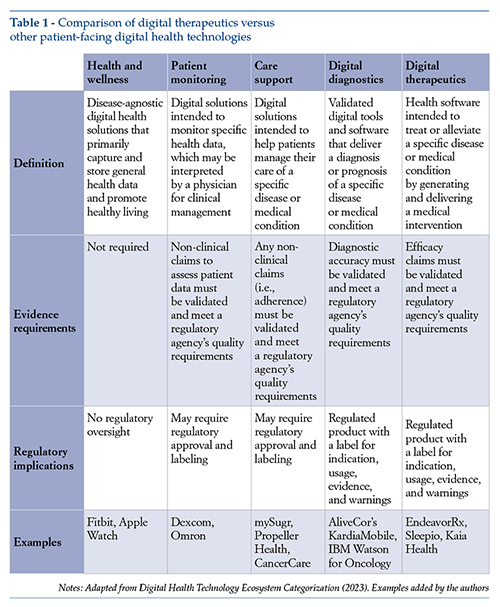
Today, DTx applications are regulated and available in several countries-such as Brazil, France, Germany, Japan, Spain, South Korea, the United Kingdom, and the United States-while in other countries they are still under regulatory development processes9 or have recently been approved for the first time.10 Despite an increasing interest in the need for DTx solutions, scholars highlighted overall confusion and misunderstandings regarding the applications of digital technologies in innovating processes involving health and healthcare.11,6 Table 1 summarizes the differences between DTx and other digital solutions in digital health field.4 DTx were often conflated with other digital health or medicine solutions that are innovative and efficacious, but that lack scientifically demonstrated effectiveness or real-world applicability.12,6 Standard digital health solutions included technologies, platforms, and systems that engage consumers for lifestyle, wellness, and health-related purposes, but did not require clinical evidence and regulatory oversight, as in the case of DTx.13,4Unlike healthcare and wellness apps or digital medicine products, DTx required strong clinical evidence and real-world outcomes.4 They needed to be reviewed, cleared, and validated by regulatory agencies, such as the FDA or notified bodies, to support claims of risk, efficacy, and intended use. Additionally, it is important to clarify the validation process when medical devices are employed. DTx solutions provided clinical results and influence clinical outcomes, as characterized by evidence-based behavioral treatments delivered via online or offline applications, which increased the accessibility and efficacy of healthcare.5
Academic literature has been paying increasing attention to DTx, in particular exploring their positive benefits4,14,15, and analyzing successful outcomes.16,17 Recently, some scholars also reviewed existing DTx literature in specific domains.18,19,20 Although these recent works have contributed to our understanding of the roles of DTx, several limitations in the scientific literature remained, such as the lack of an holistic approach (including management and business perspectives) or generalizable results relating to different spheres of digital health solutions. Many studies only analyzed clinical and macroeconomic features of DTx, or focused on regulatory issues. Hence, extant publications are fragmented and disconnected, and there has been little effort to review literature in this area.14,20
To overcome these weaknesses, the present paper aimed to map the field through a systematic literature review. Our research question is: “What main themes related to DTx have been discussed in literature to date?” Our systematic literature review sought to identify gaps, key research themes, and developmental patterns. In doing so, it consolidated and integrated dextant knowledge. Finally, we contributed to developing a reliable knowledge base for business practitioners to design and foster new solutions.
The remainder of the work is organized as follows. First, we summarized the methodology used to systematically select and review the literature. Second, we reported our findings. Third, we outlined the study’s contributions, and implications for practitioners. Finally, we provided limitations, suggestions for future research, and conclusions.
Method
Study Setting
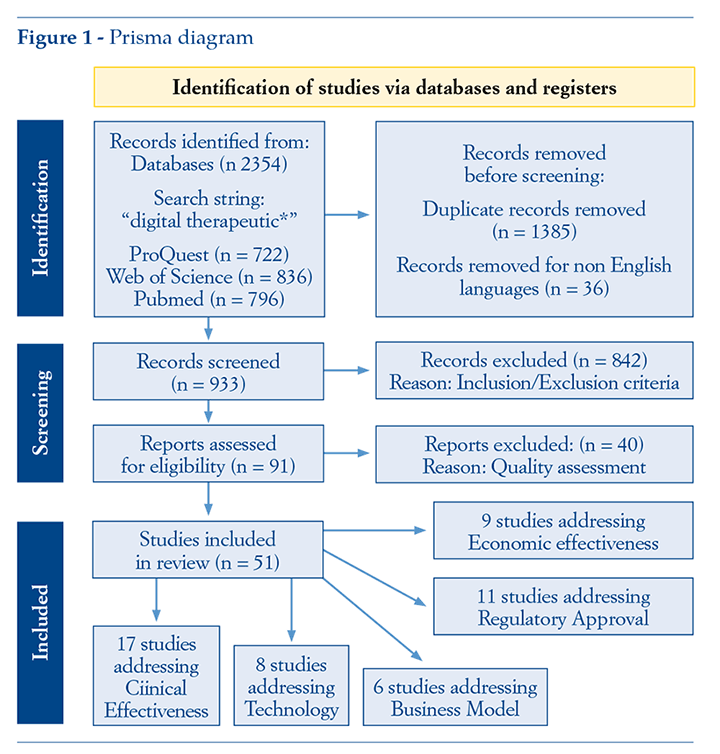
Compliant with the PRISMA methodology (figure 1), we adopted a systematic literature review and thematic analysis method, searching and collecting articles that contained the keyword “digital therapeutic*” in the following databases: ProQuest, PubMed, and Web of Science. These databases included a wide range of articles about DTx and allowed us to address every field of research, from business to medicine. The review protocol was not registered in any database or registry. The data were collected between January 2023 and June 2024, with appropriate updates made until June 2024. We decided to use only one keyword, “digital therapeutic*” because, to our knowledge, there are no synonyms for it and the inclusion of other keywords would thus have resulted in including studies unrelated to our analysis. We searched in “all fields” of academic articles to avoid missing relevant studies. The first articles that explicitly referred to DTx appeared during 2013, but the timeframe 2017-2024 was deemed appropriate due to the novelty of the DTx phenomenon.
We then defined our exclusion and inclusion criteria. We excluded articles that met at least one of the following exclusion criteria: (1) DTx used as a synonym of digital medicine, digital health, patient monitoring, digital diagnostics, care support, or e-health; (2) study mentioned DTx only in subsections, such as in relation to managerial or practical implications; and (3) DTx presented only as marginal examples within a broader topic (i.e., DTx introduced as one of many actions to make medicine more personalized). Thus, we included papers that focused on DTx in both the theoretical section and the empirical study. Identified studies were analyzed separately, and two researchers assessed and compared their interpretations to reach a consensus and mutual understanding of the inclusion criteria. Differences in interpretations or doubts were discussed, through which we sharpened and refined our inclusion and exclusion criteria.
Moreover, the papers were subjected to a quality assessment alongside the inclusion and exclusion criteria. Two methodological quality checklists-one focusing on qualitative research and the other on quantitative research-were applied based on previous checklists used in various research fields.22,23 During the selection process, two researchers conducted the quality assessment independently. In the initial quality assessment trial, two researchers each evaluated five papers’ methodologies and then compared their conclusions. Since there were only minor deviations (in less than 15 percent of judgments), we did not take corrective measures for assessing the methodological quality.
Data Analysis
Given that the studies varied greatly in measuring the relevant concepts, analysis techniques, and effect sizes, we decided to conduct a thematic analysis, categorizing studies according to their shared characteristics.24We included both quantitative and qualitative studies in this stage.23,25 The resulting papers were each characterized by the research field, research aim, and type of research (qualitative/quantitative data; data collection method). We then applied the theme development phase,25 constructing five non-exclusive themes that were ultimately defined through the reviewing phase.25 This ensured themes were distinct from each other and findings were validated.
Results
Using the three search strategies outlined above, we identified 2,354 potentially relevant studies (see figure 1). After identifying and eliminating duplicate studies (1,385) and articles written in a language other than English (36), a total of 933 retrieved studies were considered for deeper analysis. We then excluded 842 articles based on a review of their titles and abstracts. Studies were excluded if they met at least one of the exclusion criteria. We reviewed the full text of 91 articles as broadly relevant. Of these, 40 were excluded because their quality was judged to be insufficient for our purposes, according to our inclusion criteria. Our systematic review categorized 51 articles as primary references, analyzed their full text, and included them in the review. To derive our findings, we screened the 51 articles using thematic analysis-a transparent and highly flexible method that can be applied to a wide variety of unstructured information.24,25
The research question, and our desire to derive interesting insights so as to contribute to mapping the field, as described previously, were used to guide the thematic analysis. The analysis results of the 51 chosen original studies produced five main themes: clinical effectiveness, economic effectiveness, regulatory approval, business model, and technology.
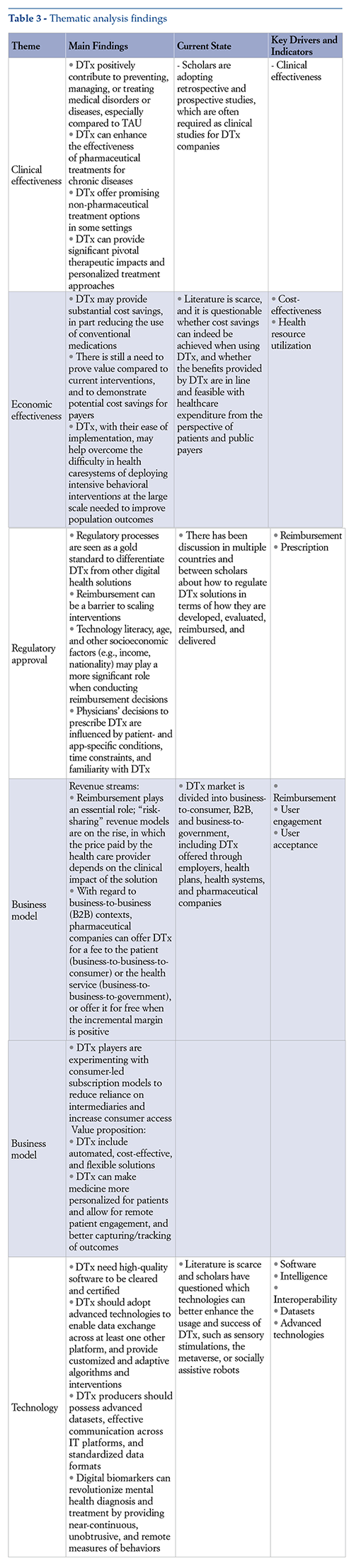
Table 2 presents an overview of each article, and findings regarding themes are summarized in
table 3.
Across the studies included in this review, 17 addressed clinical effectiveness, 9 addressed economic effectiveness, 11 addressed regulatory approval, 6 addressed business model, and 8 addressed technology (figure 1).

Clinical Effectiveness
Most of the literature on DTx has highlighted DTx’s positive contributions to preventing, managing, or treating medical disorders or diseases compared to therapy as usual (TAU). These studies have typically employed quantitative methodologies and retrospective or prospective designs, often serving as necessary clinical trials for third-party approval. A common indicator used is “clinical effectiveness,” which is frequently measured in terms of “quality-adjusted life-years” (QALYs).53 Primary intervention areas included drug abuse,21,44 major depression48, diabetes40,43, Attention Deficit Hyperactivity Disorder (ADHD)42, sleep problems, and chronic insomnia. For instance, the DTx reSET-O showed promising results for patients with opioid use disorder,44.55 while “One Drop” DTx demonstrated efficacy in diabetes management.46
Regulatory Approval
DTx companies launched solutions that, in order to be sold, require a medical prescription and reimbursement to be economically sustainable.17 There has been extensive discussion in multiple countries about how DTx solutions should be regulated, and this has considerable implications for how DTx are developed, evaluated, reimbursed, and delivered.17,62,63 Studies in this sample have viewed regulatory processes as gold standards to differentiate DTx from other digital health technologies-namely health and wellness and care support solutions.6,62,72 However, despite the many positive aspects of prescription and reimbursement (e.g., the validation of a health claim by a third party), some scholars raised concerns about current regulations regarding reimbursement as a barrier to scaling interventions.17 Moreover, other scholars viewed the prescription-based model as inappropriate, since no consensus exists on the ethical acceptability of prescribing interventions based solely on their placebo effect.63 Moreover, one leading player in DTx has been pursuing regulatory approval for over-the-counter labeling of its products, shifting its strategy to a non-prescription model so as to increase patient access to clinically validated non-drug treatments.73
Contrary to pharmaceutical drugs, whereby consideration of human biological factors (e.g., ancestry, genetics) is necessary to assess potential therapeutic effectiveness, in DTx, technology literacy, age, and other socioeconomic factors (e.g., income, nationality) may play a more significant role when making reimbursement decisions.74
Economic Effectiveness
Studies in this area explored the economic impact of DTx compared to traditional therapies, using quantitative analyses to assess costs and benefits.20,35,50 Such studies investigated whether DTx can provide cost savings and are sustainable from a healthcare expenditure perspective.74 For instance, in some intervention areas (e.g., mental health), DTx, with their ease of implementation, may help to overcome the difficulties healthcare systems face in deploying intensive behavioral interventions at the large scale needed to improve population outcomes. Measures such as incremental cost per QALY have often been use.53 For example, the use of DTx in treating chronic heart failure and hypertension showed potential economic benefits, reducing healthcare resource costs and improving quality of life.Business Model
Studies in this cluster analyzed how DTx impact business models, highlighting opportunities for pharmaceutical companies and startups.35
16,27,75 According to the company’s revenue model and channels, the DTx market is divided into business-to-consumer (B2C), business-to-business (B2B) and business-to-government (B2G), including DTx offered through employers, health plans, health systems, and pharmaceutical companies.16,75 With regard to B2B, pharmaceutical companies in turn can offer DTx for a fee to the patient (B2B2C) or the health service (B2B2G), or offer it for free when the incremental margin is positive. Regarding revenue streams, reimbursement may play an essential role;17 “risk-sharing” revenue models are on the rise, wherein the price paid by the healthcare provider depends on the clinical impact of the solution.31 However, some DTx players were experimenting with consumer-led subscription models to reduce their reliance on intermediaries and increase consumer access.73
The DTx value proposition for patients included automated, cost-effective, flexible, and convenient solutions that are available to patients 24 hours a day. Providers need to promote users’ engagement28 and ensure patients’ DTx acceptance.30 DTx can make medicine more personalized for patients and allow for remote patient engagement,28 enabling better capturing and tracking of outcomes.27
In terms of key activities and essential resources, Denecke et al.27 analyzed the complexities and challenges related to DTx, which often involve a combination of technology, healthcare processes, patient engagement, and data management. For DTx and their reimbursement processes to be widely diffused and accepted, it is fundamental to fully involve various stakeholders, especially patients and physicians, who can serve as essential allies in the complex development process of DTx.21,27
Technology
Technology represents the essence of DTx, yet few scholars have addressed this theme. It is generally agreed that DTx require high-quality software, which must also be cleared and certified.4 In this domain, some scholars questioned which technologies can most effectively enhance the usage and success of DTx.70 These technologies may include sensory stimulations,68 the metaverse51 socially assistive robots.The technology used in DTx can be viewed from the perspectives of developers and actual service users.69
70 Scholars in this vein, in fact, have shown the essential steps from the DTx service developer’s point of view on the one hand, and the technologies to be considered for each implementation step and those utilized from the service user’s point of view on the other.70 DTx producers should possess advanced datasets, ensure effective communication across IT platforms, and provide standardized data formats.16 These requirements, however, do not have to substitute the characteristics of DTx of being safe and straightforward enough to ensure broad-based adoption.16
DTx also need to be clinically validated and connected to the flow of clinical work, and should enable data collection and an instantaneous feedback loop.4.5 Finally, for developers of DTx, digital biomarkers can revolutionize mental health diagnosis and treatment by providing near-continuous, unobtrusive, and remote measures of behaviors associated with mental health symptoms, and may represent a way to better understand which variables within the therapeutic are most predictive of clinical outcomes.
Discussion
This study shed light on the effectiveness and features of DTx in healthcare. Our analysis of 51 studies showed that papers within the clinical effectiveness and economic effectiveness themes adopted mainly quantitative methodologies, with prospective and open-label clinical trials enriching data supporting the validity of DTx. This finding can be explained by the fact that DTx companies often seek clinical validation for their products and services.
We also found that DTx may represent a solution to the failure to ensure quality and safety control by providers.71,17 Ultimately, this may boost healthcare systems if DTx serve to improve patient care by preventing diseases and reducing healthcare costs.20 In addition to existing pharmacological, non-pharmacological (surgical, radiation, and physical), and psycho-behavioral therapy, DTx can cover therapeutic areas that have previously not been well addressed.29
In terms of different research fields, our findings provided three insights related to the current state of DTx literature, as well as some gaps (which we address in our section on future research). First, the challenges related to DTx mainly pertained to the medical context, which was remarkably varied and divided concerning DTx. While many doctors supported these healthcare innovations, some were reluctant to do so and have concerns about their reliability.27 In fact, while they might cut costs and assist in increasing business and profits, DTx can also undermine the need for in-person clinical visits and the human dimension of clinical care, and care in general. Many doctors were not clinically familiar with these solutions and perceive difficulty in use and inconvenience in prescribing DTx. There was also an absence of standards and processes for providing prescriptions in some cases.17 Moreover, doctors received little money for DTx, despite the effort required to explain them to patients.16
Second, the generation of clinical evidence was critical for efficacy and safety.63 Pioneering companies (e.g., Kaia Health, Sleepio, and many more) firmly emphasized on their websites and in their promotions the randomized and controlled clinical studies that their DTx have undergone, thereby validating the comparison between pharmacotherapy and DTx.31 Nevertheless, the need to revise methods to demonstrate clinical effectiveness has also been highlighted.62 Some scholars raised doubts about current policies, and suggested moving away from randomized clinical trials and heading toward pivotal studies.64 Other concerns have also been raised, such as technical characteristics of DTx being rapidly upgraded throughout a trial, and the fact that the technology itself may become outdated before the trial ends.29
Third, there was a need to consider the complex world of regulatory approval in healthcare, which often fails to keep pace with the development of new technologies.16,62 Our review emphasized the need and opportunities to revise DTx regulations, and suggested that countries should seek to move together toward common models.17 Some countries are lagging or have not provided clear or specific regulations for DTx, making it more difficult for doctors and companies to foster this healthcare innovation.6.17
In addition, to promote patient engagement and clinical outcomes, DTx may form part of a digital therapeutic ecosystem, supported by other digital health solutions, patient monitoring, and care support tools. It is essential to consider the prospects and challenges of the Internet of Things (IoT) in DTx solutions because this offers significant opportunities for real-time monitoring and personalized treatment. Moreover, DTx may be combined with the application of biosensors administered as part of small-molecule drugs to monitor adherence with drug therapy.76
DTx can also become part of the trend of emerging technologies playing the role of patient companions, such as cognitive assistants or companion robots, 77,78,79 enabling conditions and contexts that promote smart behaviors by amplifying capacities for self-understanding, control, and action.
Practical implications
This work, particularly the identified and discussed themes, provided helpful information regarding the implementation of DTx to address different types of medical disorders or diseases.
The clinical effectiveness theme provided DTx companies, physicians, and policymakers with an overall picture of DTx clinical studies in many fields (diabetes, drug abuse, ADHD, etc.), alongside the methods utilized to obtain these data. Multiple avenues of work remain open and critical elements concern how the clinical effectiveness of DTx should be demonstrated and propagated to end users. Demonstrations of DTx’s clinical effectiveness can be provided by utilizing regulatory protocols, but the co-creation of value necessarily involves multiple parties. As developers of DTx obtain regulatory approval, the next step is to gain widespread adoption.7,8,17 Here, it is essential to overcome the barriers set by clinicians, such as concerns regarding personal privacy, equal access, and safety.6 This study identified many studies that have clinically supported DTx, but few related to privacy and equal access issues.
The economic effectiveness theme provided policymakers with valuable insights on the validity of DTx for the health system. Many studies have shown how DTx can reduce health resource utilization costs compared to TAU.
The regulatory approval theme provided policymakers with a picture of norms and practices to date, along with their critical issues and related academic discussions from different points of view (pharma companies, physicians, other companies, and psychologists). This theme suggested that practitioners must carefully address the complex world of regulatory approvals, which are now essential for market entry. This study acknowledged that DTx represent a heavily regulated industry. Companies need to be aware of existing restrictions and pay particularly close attention to recent changes in the regulatory environment, which can either create opportunities or force every actor in the industry to adapt. Shedding light on regulations, and the economic and clinical efficacy of DTx, represents an opportunity for the health system.40 Then, by understanding the value that DTx can generate and distribute to the overall ecosystem, policymakers should design rules and policies that keep pace with rapid technology innovations.16 To ensure broad adoption, policymakers must facilitate the process, guaranteeing ease and clarity in obtaining certifications and reimbursement.
Little has been discussed in the reviewed articles about the specific technology DTx companies should adopt. However, the technology discussion indicated that DTx designers should consider the state of clinical effectiveness and the careful adoption of appropriate technology.16
Alongside the technological characteristics DTx should possess, this study underlined several key components of the business model followed by DTx companies. These companies should design innovative and feasible solutions so as to effectively penetrate the market. As with non-digital medicine, it is essential for DTx companies to gain doctors’ trust and educate them regarding DTx to allow for appropriate prescription and to promote adoption.30 DTx success may depend on doctors and caregivers taking active roles in promoting new practices in using technologies, and patients being engaged. To capture and harness this growth market, managers must be able to understand patients’ complex and diverse needs.
This study also helped policymakers, healthcare professionals, and DTx manufacturers to devise effective products and services tailored at fostering well-being, the possibility of accessing care, and risk-reduction of treatments that, to date, have had no or little adherence.
Finally, this study presented guidelines and opportunities for healthcare providers and physicians, first arguing that DTx interventions do not wholly displace the human contact that is an essential part of healthcare. Armed with technology and DTx monitoring and treatment of patient symptoms, physicians will have a greater opportunity to perfect the “human touch” element by spending time with patients for emotional, empathetic, and personal reasons. Nevertheless, at the same time, general practitioners must be able to understand and manage new concepts that are competing in the technological sphere. To this end, adequate training must be provided to integrate clinical skills.
Limitations and further research
Our study is not without limitations, and these could serve to guide further research and future DTx literature reviews.
First, we utilized only three databases for our literature search, which may have restricted the breadth of the reviewed literature and excluded relevant studies available in other databases. Future research should include more databases from diverse disciplines, such as social sciences, humanities, and interdisciplinary studies. This broader approach would capture a wider range of perspectives and findings. For instance, incorporating JSTOR, PsycINFO, and Sociological Abstracts could enrich the literature and provide a more holistic view of DTx research.
Second, our technocratic approach to DTx may have neglected sociological, political, and historical dimensions, leading to an incomplete understanding of its implications and effectiveness. This limitation arose partly due to the limited availability of literature that has integrated these perspectives with DTx. For example, there is wide research from the field of critical sociology on how diagnostic categories, such as ADHD, have been constructed and expanded over the past few decades.80 Future studies should integrate these perspectives, examining power dynamics, social constructionism, and historical contexts.81Additionally, insights from anthropology, ethics, and cultural studies are essential to understand how cultural beliefs, ethical considerations, and human behaviors influence DTx. This should include exploring data privacy issues82 and how cultural variations affect the user experience and the effectiveness of digital health interventions.
We also proposed several avenues for further research, which we addressed according to each theme (see table 4). With some governments taking initiatives and launching programs to increase the adoption rate of digital health solutions, future studies should carefully analyze DTx regulations and the role of the public sector in addressing these, since the needs of companies in producing and launching DTx solutions on the market in a short time must go hand in hand with specific regulation and policies.
Regarding technology, scholars could seek to develop a comprehensive picture of the roles of IoT, sensors/devices, and hardware in DTx solutions and whether they can help monitor treatment adherence in complement to a traditional therapeutic approach. So far, companies such as Voluntis and Kaia Health have not used hardware in their solutions, while others, such as Omada and Propeller, have based their solutions on the selling of wearables and hardware components. There are articles (see systematic review in Cornet and Holder83) that extensively discussed technological aspects that could be related to the DTx field. In terms of business model, with the rise of chronic diseases, research may also examine the motivations and needs of doctors and healthcare providers. Regarding DTx effectiveness, literature may also proceed to separately address economic and clinical aspects. In some countries (e.g., Germany), randomized controlled trials represent the gold standard for assessing the efficacy of therapeutic interventions,17 as they provide a high degree of internal validity. However, they can fail to adequately address questions about real-world resource utilization and costs. Hence, scholars may seek to provide “real-world” observational data.21
DTx represent a global and interdisciplinary area of research, where scholars from every field (i.e., economics, engineering, law, management, medicine, social and political sciences, etc.) are called to contribute to taking advantage of the numerous opportunities and challenges of this disruptive phenomenon.
In recent years, the scientific literature on DTx has grown tremendously. However, more literature is needed, especially because the community is now looking at how DTx solutions will contribute to creating mixed, or “chimaera,” industries-that is, combinations of transitional industries such as healthcare, pharma, and technology. Moreover, in relation to DTx, there is a need to address the social and political determinants of health, going beyond a mere digital lens.80,84
We noticed that further and holistic investigation is required with respect to the technology, economics, and management themes related to DTx. For instance, we found no research on the actors’ ecosystem concerning DTx, although scholars have underscored the importance of involving all key actors (patients, physicians, pharmacists, pharma companies, policymakers, payors) to deliver effective and profitable Dtx.

Conclusions
In conclusion, this research underscored the potential of DTx in improving patient outcomes and fostering innovative business models involving pharmaceutical, technology, and healthcare companies, alongside governments and other key actors, all of which contribute to the creation of a thriving ecosystem. However, realizing this potential necessitates joint action and cultural transformation. At present, the trajectory of DTx appears both promising and uncertain. While these solutions demonstrate remarkable potential and growth, they also entail challenges within certain startups and are not being universally embraced by all stakeholders, with varying levels of skepticism being expressed. The dual narrative underscored the complex landscape DTx providers must navigate.
DTx hold promise as various stakeholders actively engage in their integration and promotion, thereby contributing to a transformative shift in healthcare delivery. Specifically,
• Governments should actively engage in facilitating DTx utilization, incorporating regulatory facilitation, financial support, and public awareness campaigns to maximize the impact of DTx on healthcare delivery.
• Healthcare professionals should prescribe DTx to patients and advocate for their efficacy, seeking to foster patient trust and ensure effective utilization, which will result in enhanced disease management and overall improvements to health.
• Insurers should integrate DTx into policies, providing added value to policyholders by offering them cost-effective solutions, thereby improving health outcomes and reducing expenses.
• Companies should include DTx in benefit packages, thereby enhancing employee well-being and empowering them to proactively manage their health.
Further developments could catalyze a fundamental transformation in the global healthcare landscape, fostering innovation, improving access to care, and optimizing system efficiency to increase value co-creation and well-being for the actors involved.
Funding
This PhD project is supported by a grant from the Italian Minister of Research (PON ricerca 2014-20 Decreto Ministeriale n. 0000153 del 25.01.2017).
Ethical approval
Institutional review board approval was not required, as this article comprises a systematic review of the literature and not original research.
Declaration of conflicting interests
The author(s) declare no potential conflicts of interest with respect to the research, authorship, and/or publication of this article.
Contributorship
AR: writing-original draft, resources, methodology, investigation, data curation. MG: writing-review and editing, validation, conceptualization. PL: writing-review and editing, conceptualization. CM: writing-review and editing, investigation. LS: supervision-project administration.
Patient consent statements: The authors confirm that the Patient Consent Statement is not required since this study did not involve any patients or subjects as this is a systematic review manuscript based on other published papers.
Note
Guarantor: AR.
Digital therapeutics: a systematic literature review
Authors
• Andrea Ruggiero is an experienced professional and a researcher with a PhD in Management, Department of Economics, Management and Institutions, University of Naples Federico II, Naples, Italy. E-mail: andrearug1994@gmail.com; Address: Via Cintia, 21. 80126 Napoli; Number: +393663332326. Corresponding author.
• Mauro Gatti is an Architect and Data Scientist, IBM Italy.
• Pietro Leo is an Executive Architect and member of IBM Academy of Technology, IBM Italy.
• Cristina Mele is a Full professor of Management, Department of Economics, Management and Institutions, University of Naples Federico II, Naples.
• Luigi Somaini is a Business Development Manager, IBM Italy.
Acknowledgments
This research activity is part of the PhD project Andrea Ruggiero has developed which involved IBM Italy, “Università degli Studi di Napoli Federico II” and other institutions. This PhD project is supported also by a grant of the Italian Minister of Research (PON ricerca 2014-20 Decreto Ministeriale n. 0000153 del 25.01.2017). We are thankful to Giovanna Camorali, Vincenzo Saturnino, Francesco Giuliani, Chiara Marchioni, Jaan-Udo Morosov, Thomas Brunschwiller, Roberto Storchi, Tullio Fatigati.
Conflicts of interest
No potential conflict of interest was reported by the authors.
References
1. McKinsey. The health benefits and business potential of digital therapeutics. Available from: https://www.mckinsey.com/industries/life-sciences/our-insights/the-health-benefits-and-business-potential-of-digital-therapeutics#/
2. Business Insider. Using video games as medical treatments seemed promising, but a stunning failure raises questions about the future of digital therapeutics. Available from: https://www.businessinsider.com/how-digital-therapeutics-startups-can-survive-after-pear-bankruptcy-2023-6
3. Markets and Markets. Digital therapeutics (DTx) market by application (prediabetes, nutrition, care, diabetes, CVD, CNS, CRD, MSD, GI, substance abuse, rehabilitation), sales channel (B2C, patient, caregiver, B2B, providers, payer, employer, pharma)-Global forecasts to 2027. Available from: https://www.marketsandmarkets.com/Market-Reports/digital-therapeutics-market-51646724.html
4. Digital Therapeutics Alliance. Comparison guide: Patient-facing digital health technologies (DHTs). Available from: https://dtxalliance.org/wp-content/uploads/2023/06/DTA_FS_Patient-Facing-DHT-Comparison-Guide.pdf
5. ISO. ISO/TR 11147:2023; Health informatics; Personalized digital health: Digital therapeutics health software systems. Available from: https://www.iso.org/standard/83767.html
6. Recchia G, Gussoni G. Digital Therapeutics: Scientific, technological, and regulatory challenges. In: Personalized medicine meets artificial intelligence: Beyond “hype”, towards the metaverse. Springer International Publishing; 2023, pp. 37–50.
7. McKinsey. The promise of digital therapeutics. Available from: https://www.mckinsey.com/industries/life-sciences/our-insights/the-promise-of-digital-therapeutics
8. Osterwalder A, Pigneur Y. Business model generation: a handbook for visionaries, game changers, and challengers. Vol. 1. John Wiley & Sons; 2010.
9. Wired. Finalmente l’Italia inizia a fare sul serio sulle terapie digitali. Available from: https://www.wired.it/terapie-digitali-politica-italiana-parlamento/
10. Deprexis. Digital Therapy That Works. Available from: https://it.deprexis.com/acquista-un-codice-di-accesso-deprexisr
11. Recchia G, Capuano DM, Mistri N, Verna R. Digital Therapeutics-What they are, what they will be. Acta Sci Med Sci 2020; 4: 1-9.
12. Torous J, Hsin H. Empowering the digital therapeutic relationship: virtual clinics for digital health interventions. NPJ Digit Med 2018; 1: 16.
13. Goldsack J, Coder M, Fitzgerald C, Navar-Mattingly N, Corvos A, Atreja A. Digital health, digital medicine, digital therapeutics (DTx): What’s the difference. DiMe 2019; 10.
14. Santoro E, Boscherini L, Lugo A. Terapie digitali: una revisione degli studi clinici. Ric Pra 2021; 37: 112-116.
15. Ribba B, Peck R, Hutchinson L, Bousnina I, Motti D. Digital therapeutics as a new therapeutic modality: a review from the perspective of clinical pharmacology. Clin Pharmacol Ther 2023; 114: 578-590.
16. Hong JS, Wasden C, Han DH. Introduction of Digital Therapeutics. Comput Methods Programs Biomed 2021; 209: 106319.
17. Mantovani A, Leopaldi C, Nighswander CM, Di Bidino R. Access and reimbursement pathways for digital health solutions and in vitro diagnostic devices: Current scenario and challenges. Front Med Technol 2023; 5: 1101476.
18. An S, Ko J, Yu KS, Kwon H, Kim S, Hong J, Kong HJ. Exploring the category and use cases on digital therapeutic methodologies. Healthc Inform Res 2023; 29: 190-198.
19. Phan P, Mitragotri S, Zhao Z. Digital therapeutics in the clinic. Bioeng Transl Med 2023; 8: e10536.
20. Sapanel Y, Tadeo X, Brenna CT, Remus A, Koerber F, Cloutier LM, et al. Economic evaluation associated with clinical-grade mobile app-based digital therapeutic interventions: Systematic review. J Med Internet Res 2023; 25: e47094.
21. Wang C, Lee C, Shin H. Digital therapeutics from bench to bedside. NPJ Digit Med 2023; 6: 38.
22. Thomas J, Harden A, Oakley A, Oliver S, Sutcliffe K, Rees R, et al. Integrating qualitative research with trials in systematic reviews. Bmj 2004; 328: 1010-1012.
23. Hage E, Roo JP, van Offenbeek MA, Boonstra A. Implementation factors and their effect on e-Health service adoption in rural communities: A systematic literature review. BMC Health Serv Res 2013; 13: 1-16.
24. Terry G, Hayfield N, Clarke V, Braun V. Thematic analysis. In: The SAGE handbook of qualitative research in psychology, 2nd ed. SAGE; 2017, pp. 17-37.
25. Dixon-Woods M, Agarwal S, Young B, Jones D, Sutton A. Integrative approaches to qualitative and quantitative evidence. Health Dev Agency; 2004.
26. Lumbreras AG, Hurwitz JT, Liang X, Schippers S, Phillip K, Bhattacharjee S, et al. Insights into insurance coverage for digital therapeutics: A qualitative study of US payer perspectives. J Manag Care Spec Pharm 2024; 30: 313-325.
27. Denecke K, May R, Gabarron E, Lopez-Campos GH. Assessing the potential risks of digital therapeutics (DTx): The DTx risk assessment canvas. J Pers Med 2023; 13: 1523.
28. Strauss G, Flannery JE, Vierra E, Koepsell X, Berglund E, Miller I, et al. Meaningful engagement: A crossfunctional framework for digital therapeutics. Front Digit Health 2022; 4: 890081.
29. Chung JY. Digital therapeutics and clinical pharmacology. Transl Clin Pharmacol 2019; 27: 6-11.
30. Carrera A, Zoccarato F, Mazzeo M, Lettieri E, Toletti G, Bertoli S, et al. What drives patients’ acceptance of Digital Therapeutics? Establishing a new framework to measure the interplay between rational and institutional factors. BMC Health Serv Res 2023; 23: 145.
31. Geiger S, Kjellberg H. Market mash ups: The process of combinatorial market innovation. J Bus Res 2021; 124: 445-457.
32. Biskupiak Z, Ha VV, Rohaj A, Bulaj G. Digital therapeutics for improving effectiveness of pharmaceutical drugs and biological products: Preclinical and clinical studies supporting development of drug+digital combination therapies for chronic diseases. J Clin Med 2024; 13: 403.
33. Lee H, Choi EH, Shin JU, Kim TG, Oh J, Shin B, et al. The impact of intervention design on user engagement in digital therapeutics research: Factorial experiment with a mixed methods study. JMIR Form Res 2024; 8: e51225.
34. Namgung E, Kwon SU, Han MK, Kim GM, Kim HY, Park KY, et al. Digital therapeutics using virtual reality based visual perceptual learning for visual field defects in stroke: A double blind randomized trial. Brain Behav 2024; 14: e3525.
35. Nomura A, Takagi Y, Tanigawa T, Takamura M, Node K, Kario K. Blood pressure management in 1,000 patients with CureApp HT digital therapeutics for hypertension. medRxiv 2024.
36. Oh S, Choi J, Han DH, Kim E. Effects of game-based digital therapeutics on attention deficit hyperactivity disorder in children and adolescents as assessed by parents or teachers: a systematic review and meta-analysis. Eur Child Adolesc Psychiatry 2024;33:481-493.
37. Orsolini L, Longo G, Volpe U. Practical application of digital therapeutics in people with mood disorders. Curr Opin Psychiatry 2024;37:9-17.
38. Seo YC, Yong SY, Choi WW, Kim SH. Meta-analysis of studies on the effects of digital therapeutics. J Pers Med 2024;14:157.
39. Monico LB, Eastlick M, Michero D, Pielsticker P, Glasner S. Feasibility and acceptability of a novel digital therapeutic combining behavioral and pharmacological treatment for opioid use disorder. Digit Health 2024;10.
40. Kario K, Tomitani N, Harada N, Okura A, Hisaki F, Tanigawa T, et al. Home blood pressure-lowering effect of digital therapeutics in hypertension: Impact of body weight and salt intake. Hypertens Res 2023;46:1181-1187.
41. Li Y, Yip MY, Ting DS, Ang M. Artificial intelligence and digital solutions for myopia. Taiwan J Ophthalmol 2023;13:142-150.
42. Sun TH, Yeom JW, Choi KY, Kim JL, Lee HJ, Kim HJ, et al. Potential effectiveness of digital therapeutics specialized in executive functions as adjunctive treatment for clinical symptoms of attention-deficit/hyperactivity disorder: A feasibility study. Front Psychiatry 2023;14.
43. Joshi S, Verma R, Lathia T, Selvan C, Tanna S, Saraf A, et al. Fitterfly diabetes CGM digital therapeutics program for glycemic control and weight management in people with type 2 diabetes mellitus: Real-world effectiveness evaluation. JMIR Diabetes 2023;8.
44. Xiong X, Braun S, Stitzer M, Luderer H, Shafai G, Hare B, et al. Evaluation of real world outcomes associated with use of a prescription digital therapeutic to treat substance use disorders. Am J Addict 2023;32:24-31.
45. Maricich YA, Xiong X, Gerwien R, Kuo A, Velez F, Imbert B, et al. Real-world evidence for a prescription digital therapeutic to treat opioid use disorder. Curr Med Res Opin 2021;37:175-183.
46. Osborn CY, Hirsch A, Sears LE, Heyman M, Raymond J, Huddleston B, et al. One drop app with an activity tracker for adults with type 1 diabetes: Randomised controlled trial. JMIR Mhealth Uhealth 2020;8.
47. Bray L, Sharpe A, Gichuru P, Fortune PM, Blake L, Appleton V. The acceptability and impact of the Xploro digital therapeutic platform to inform and prepare children for planned procedures in a hospital: Before and after evaluation study. J Med Internet Res 2020;22.
48. Iacoviello BM, Murrough JW, Hoch MM, Huryk KM, Collins KA, Cutter GR, et al. A randomized controlled pilot trial of the Emotional Faces Memory Task: a digital therapeutic for depression. NPJ Digit Med 2018;1:1-7.
49. Davison NJ, Guthrie NL, Medland S, Lupinacci P, Nordyke RJ, Berman MA. Cost-effectiveness analysis of a prescription digital therapeutic in type 2 diabetes. Adv Ther 2024;41:806-825.
50. Liu T, Zhan Y, Chen S, Zhang W, Jia J. Cost-effectiveness analysis of digital therapeutics for home-based cardiac rehabilitation for patients with chronic heart failure: Model development and data analysis. Cost Eff Resour Alloc 2023;21:82.
51. Kim EJ, Kim JY. The metaverse for healthcare: Trends, applications, and future directions of digital therapeutics for urology. Int Neurourol J 2023;27(Suppl 1).
52. Nomura A, Tanigawa T, Kario K, Igarashi A. Cost-effectiveness of digital therapeutics for essential hypertension. Hypertens Res 2022;45:1538-1548.
53. Velez FF, Malone DC. Cost-effectiveness analysis of a prescription digital therapeutic for the treatment of opioid use disorder. J Market Access Health Policy 2021;9:1966187.
54. Wang W, Gellings Lowe N, Jalali A, Murphy SM. Economic modeling of reSET-O, a prescription digital therapeutic for patients with opioid use disorder. J Med Econ 2021;24:61-68.
55. Velez FF, Luderer HF, Gerwien R, Parcher B, Mezzio D, Malone DC. Evaluation of the cost-utility of a prescription digital therapeutic for the treatment of opioid use disorder. Postgrad Med 2021;133:421-427.
56. Nordyke RJ, Appelbaum K, Berman MA. Estimating the impact of novel digital therapeutics in type 2 diabetes and hypertension: health economic analysis. J Med Internet Res 2019;21.
57. Carrera A, Manetti S, Lettieri E. Rewiring care delivery through digital therapeutics (DTx): a machine learning-enhanced assessment and development (M-LEAD) framework. BMC Health Serv Res 2024;24:237.
58. Kendziorra J, Ebers L, Winkler TJ. Unraveling the formation of physicians’ decisions to prescribe digital therapeutics. eLibrary 2024.
59. Miao BY, Sushil M, Xu A, Wang M, Arneson D, Berkley E, et al. Characterisation of digital therapeutic clinical trials: A systematic review with natural language processing. Lancet Digit Health 2024;6-e229.
60. Schmidt L, Pawlitzki M, Renard BY, Meuth SG, Masanneck L. The three-year evolution of Germany’s digital therapeutics reimbursement program and its path forward. NPJ Digit Med 2024;7:139..
61. Kim M, Patrick K, Nebeker C, et al. The Digital Therapeutics Real-World Evidence Framework: An Approach for Guiding Evidence-Based Digital Therapeutics Design, Development, Testing, and Monitoring. J Med Internet Res 2024;26
62. Kumar A, Ross JS, Patel NA, et al. Studies of prescription digital therapeutics often lack rigor and inclusivity: Study examines prescription digital therapeutics standards. Health Aff 2023;42:1559-1567.
63. Smits M, Ludden GD, Verbeek PP, et al. How digital therapeutics are urging the need for a paradigm shift: from evidence-based health care to evidence-based well-being. Interact J Med Res 2022;11
64. Carl JR, Jones DJ, Lindhiem OJ, et al. Regulating digital therapeutics for mental health: Opportunities, challenges, and the essential role of psychologists. Br J Clin Psychol 2022;61:130-135.
65. Bolpagni M, Pardini S, Gabrielli S. Human centered design of AI-powered digital therapeutics for stress prevention: Perspectives from multi-stakeholders’ workshops about the Shiva Solution. SSRN 2024.
66. Rheinberger D, Baffsky R, McGillivray L, et al. Digital therapeutics in the hospital for suicide crisis-content and design recommendations from young people and hospital staff. Digit Health 2024;10.
67. Weimann TG, Gißke C. Unleashing the potential of reinforcement learning for personalizing behavioral transformations with digital therapeutics: A systematic literature review. BIOSTEC 2024;2:230-245.
68. Fougère M, Greco-Vuilloud J, Arnous C, et al. Sensory stimulations potentializing digital therapeutics pain control. Front Pain Res 2023;4.
69. Stanojevic C, Bennett CC, Sabanovic S, et al. Conceptualizing socially-assistive robots as a digital therapeutic tool in healthcare. Front Digit Health 2023;5:1208350.
70. Yoo JH, Jeong H, Chung TM. Cutting-edge technologies for digital therapeutics: A review and architecture proposals for future directions. Appl Sci 2023;13:6929.
71. Adler DA, Wang F, Mohr DC, et al. A call for open data to develop mental health digital biomarkers. BJPsych Open 2022;8
72. Watson A, Chapman R, Shafai G, et al. FDA regulations and prescription digital therapeutics: Evolving with the technologies they regulate. Front Digit Health 2023;5:1086219.
73. Akili announces business transformation, focusing on non-prescription model. Business Wire.https://www.businesswire.com/news/home/20230913220525/en/Akili-Announces-Business-Transformation-Focusing-on-Non-prescription-Model (2023, accessed 12 July 2023).
74. Yan K, Balijepalli C, Druyts E. The impact of digital therapeutics on current health technology assessment frameworks. Front Digit Health 2021;3.
75. Recchia G, Barbanti P, Cottini L, et al. Digital Therapeutics, prerequisites for development of the technological and economic ecosystem in Italy and Europe. Tendenze 2021;127.
76. Belluck P. First digital pill approved to worries about biomedical “big brother.” New York Times 2017;13.
77. Odekerken-Schröder G, Mele C, Russo-Spena T, et al. Mitigating loneliness with companion robots in the COVID-19 pandemic and beyond: an integrative framework and research agenda. J Serv Manag 2020;31:1149-1162.
78. Mele C, Russo-Spena T, Marzullo M, et al. Boundary work in value co-creation practices: the mediating role of cognitive assistants. J Serv Manag 2022;33:342-362.
79. Ruggiero A, Mahr D, Odekerken-Schröder G, et al. Companion robots for well-being: A review and relational framework. In: Research handbook on services management. Cheltenham: Edward Elgar Publishing, 2022, pp. 309-330.
80. Conrad P, Potter D. From hyperactive children to ADHD adults: Observations on the expansion of medical categories. Soc Probl 2000;47:559-582.
81. Hacking I. The social construction of what?. Cambridge: Harvard University Press, 1999.
82. Floridi L. The ethics of information. Oxford: Oxford University Press, 2013.
83. Cornet VP, Holden RJ. Systematic review of smartphone-based passive sensing for health and wellbeing. J Biomed Inform 2018;77:120-132.
84. Read J, Moncrieff J. Depression: Why drugs and electricity are not the answer. Psychol Med 2022;52:1401-1410.